👉 Read the article here (paywall)
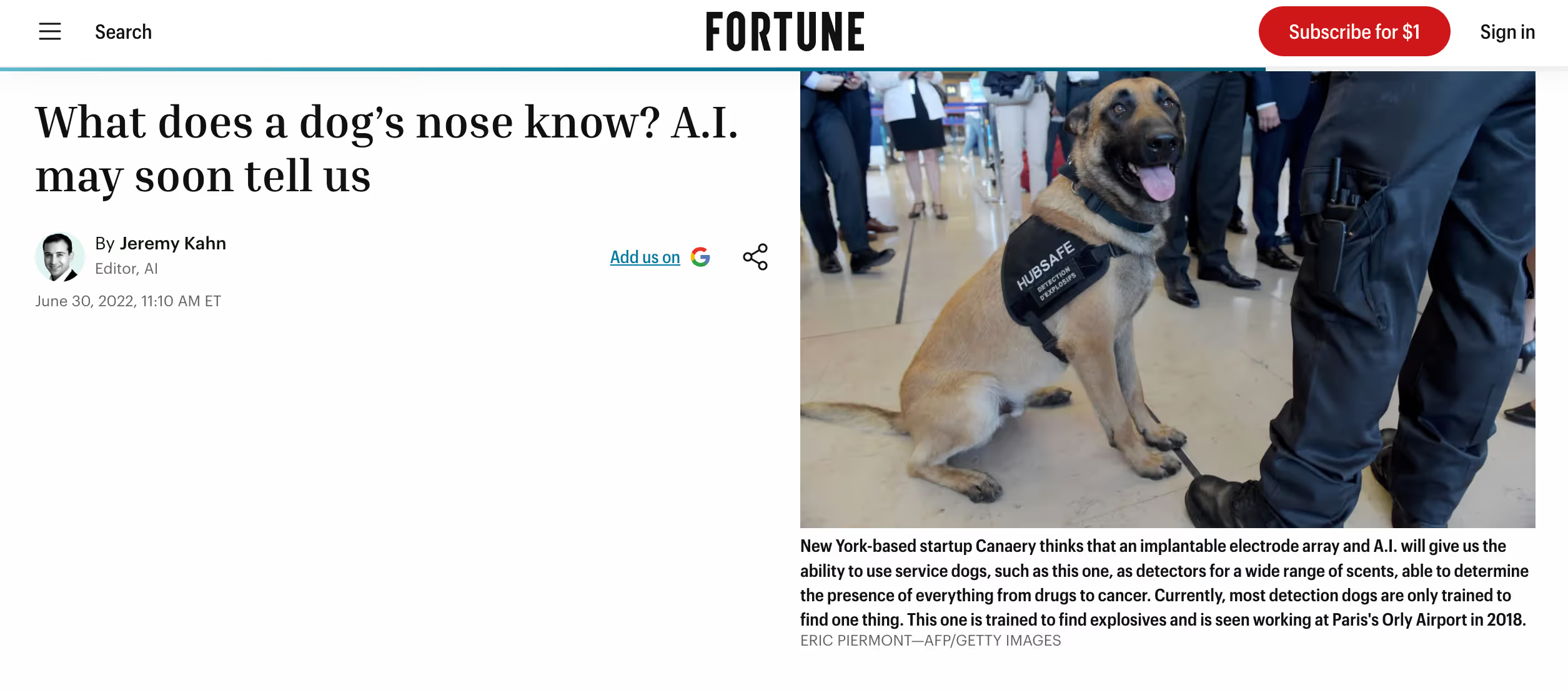
Fortune's Eye on AI newsletter was among the first major business publications to cover General Sense — then Canaery — when Jeremy Kahn profiled the company in June 2022, shortly after the close of our $4 million seed round led by Breakout Ventures with participation from Dolby Family Ventures, KdT Ventures, and SOSV.
Kahn's framing was prescient. He led with the staggering capability gap between biological and electronic noses: dogs can detect odors at concentrations as low as one part per trillion — a sensitivity hundreds of thousands of times greater than humans. Meanwhile, the best electronic alternatives — Gas Chromatography/Mass Spectrometry (GC/MS) machines — cost over $100,000 and take at least 20 minutes to analyze a single sample.
Our founder and CEO Gabriel Lavella summarized the thesis in a line that still defines the company: "This does for scent what machine vision did for sight."
Breakout Ventures Managing Partner Lindy Fishburne, who joined the Canaery board, added: "For years we have looked at approaches to digitize scent and have never found a solution as elegant and scalable as Canaery's technology."
The Fortune piece was written at the seed stage — the technology was early, the vision was big, and much of the reporting necessarily focused on what the company planned to do. Three years later, that plan has been systematically executed.
At the time of publication, the company was working with rats and planned field trials by Q4 2022. Since then, General Sense has:
The Fortune article also identified the key markets correctly: port and border security first, then agriculture and pest detection, then medical diagnostics pending Food and Drug Administration (FDA) clinical trials. That sequencing remains our go-to-market strategy — start where the regulatory burden is lowest and the need is most acute, then expand into adjacencies as the platform matures.
Fortune covering a seed-stage startup in their flagship AI newsletter signaled early that the intersection of neurotechnology and olfaction was not fringe science — it was a viable commercial category. The fact that the company has delivered on the roadmap Kahn outlined in 2022 makes this piece a useful baseline for anyone tracking our trajectory.