The Earth speaks in chemistry

Continuous chemical monitoring across agricultural and environmental systems, from crop disease to invasive species, catching what satellites can't see.
What we do
General Sense captures chemical telemetry from  agricultural fields, water systems, and natural environments.
the problem

The cost of finding out too late.

Crop disease and invasive species drain hundreds of billions of dollars a year from farms, forests and waterways. Nearly all of that money goes to damage after the fact, and very little to catching problems early.
40%
of global crop production is lost to plant pests and diseases.
FAO ↗
90%+
fall in Florida orange production since citrus greening arrived in 2005.
UF/IFAS; USDA NASS, 2026 ↗
$423B+
a year in global costs from invasive species, a bill that has quadrupled every decade since 1970.
IPBES, 2023 ↗
1 : 400
For every dollar spent keeping invasive species out, about $400 has gone to damage from the ones that got in.
Cuthbert et al., Science of the Total Environment, 2022 ↗
use cases

Soil, air, and water data at your fingertips.

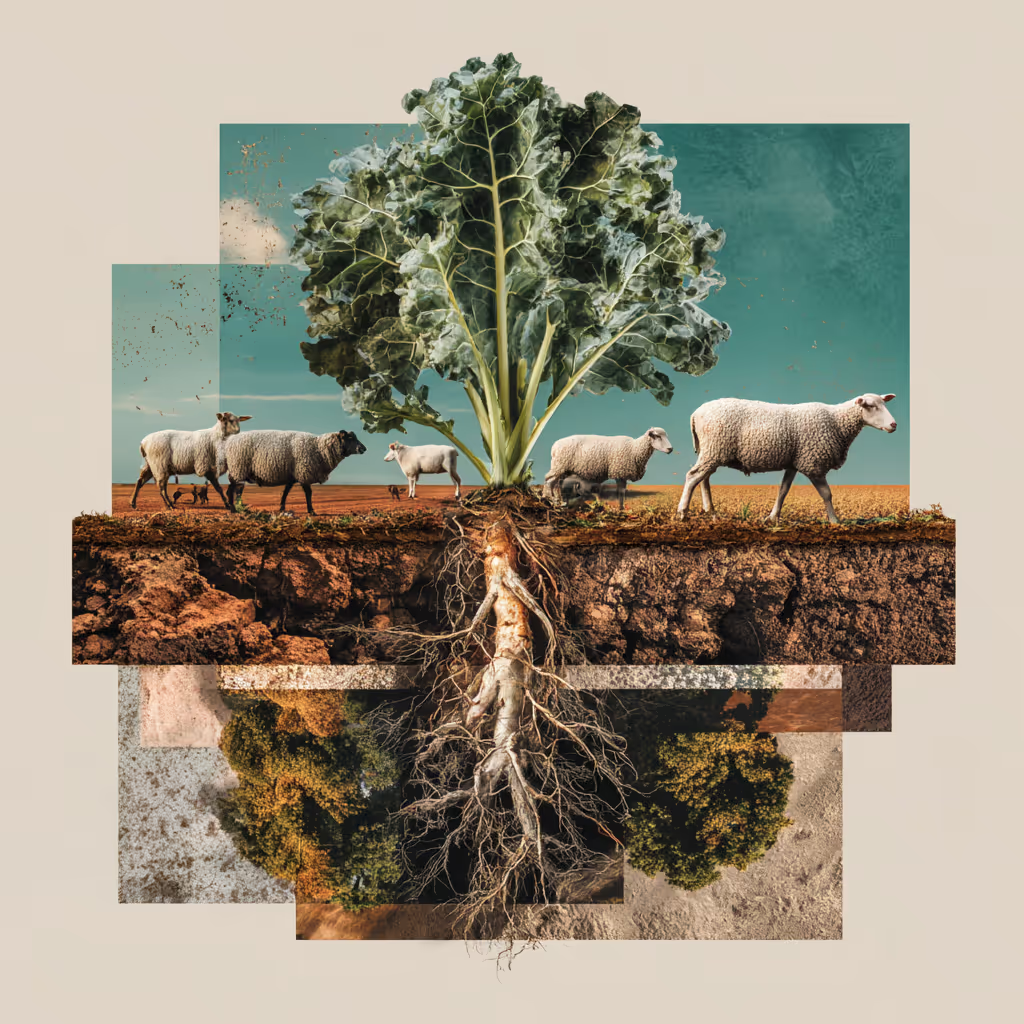
Farm's full chemical picture
From soil microbial health to livestock health management, take full control of precision agriculture with more data.
Collage of sheep grazing beside a kale plant, with a cross-section of soil and roots below
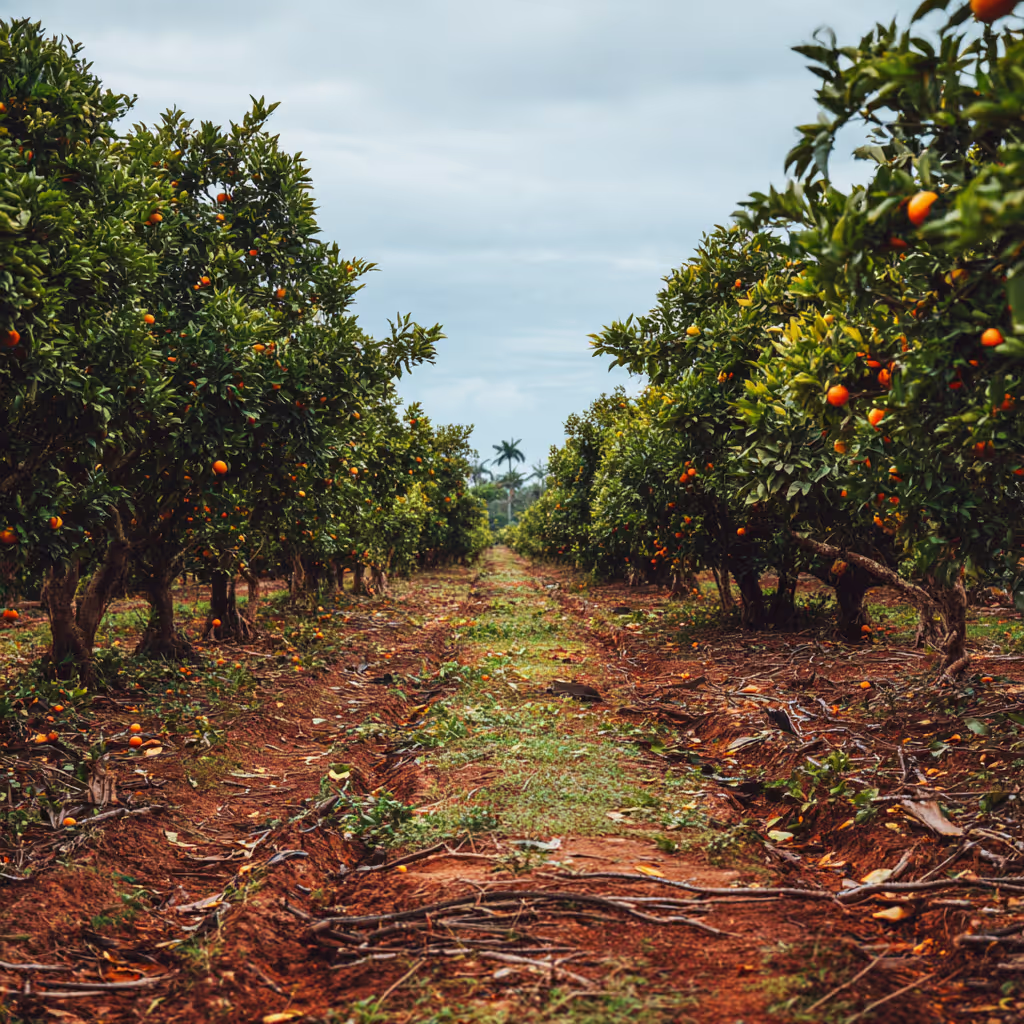
Molecular eyes on every tree
Detect and proactively manage citrus greening, canker, and fungal pathogens through VOC signatures weeks before the first visible symptom appears.
A long row of orange trees in a citrus grove under a cloudy sky
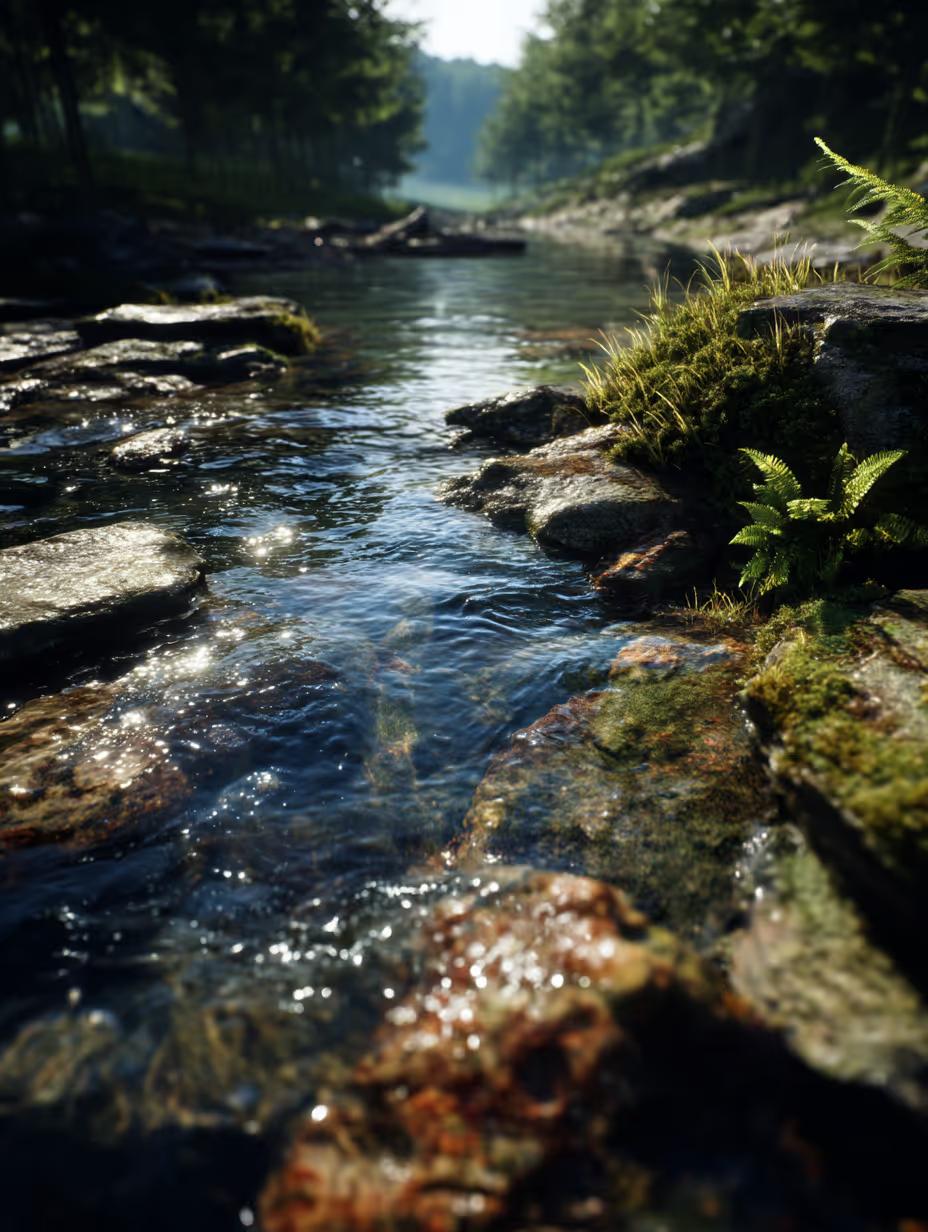
Waterways and watersheds
Continuous surveillance of waterways — detecting agricultural runoff, industrial contamination, and algal bloom precursors.
A clear stream running over mossy rocks through a forest
Invaders, found early
Find spotted lanternfly egg masses, wood-boring beetles and other invaders while a population is still small enough to eradicate.
A springer spaniel sniffs egg masses on a tree trunk while a handler holds the leash
Every port of entry
Screen cargo, luggage and plant shipments for pests and prohibited agricultural products before they move inland.
A beagle sniffs a duffel bag and produce crates in an airport arrivals hall
Herds and wildlife
Support animal-disease response, from routine barn checks to the carcass searches dog teams already run during African swine fever outbreaks.
A black Labrador works the aisle of a cattle barn while a farmer watches
invasive species

Invasions are won or lost while they're still small.

Request a pilot
Every agency fighting invasive species runs the same playbook, early detection and rapid response, and detection is the weak link. Visual surveys and traps tend to find an invasion once it is large enough to see, when eradication costs far more or is no longer possible. Detection dogs find the egg mass, the larva under the bark and the mussel on the hull while a population is still small enough to remove.
Spotted lanternfly · Asian longhorned beetle · Emerald ash borer · Zebra and quagga mussels · Brown tree snake · Burmese python · Red palm weevil · New World screwworm · Spotted knapweed

A yellow Labrador sniffs the hull of a fishing boat at a lakeside ramp beside an inspector
the evidence
Ecology and Evolution review: across 34 head-to-head studies, detection dogs beat human surveyors and other methods 91% of the time.

Every acre of farmland, every watershed, every supply chain node emits a chemical signature.

already on the job

Dogs already guard the food supply.

Detection dogs are a standard tool in agriculture and conservation, documented in 62 countries and used to find more than 400 animal species, 42 plants and 26 fungi. The kennels, handlers and budgets already exist.
Ports of entry
More than 160 beagle teams screen luggage and cargo for prohibited plants, meat and pests. Congress wrote their training center into law in 2024.
Beagle Brigade Act, 2024 ↗
Citrus groves
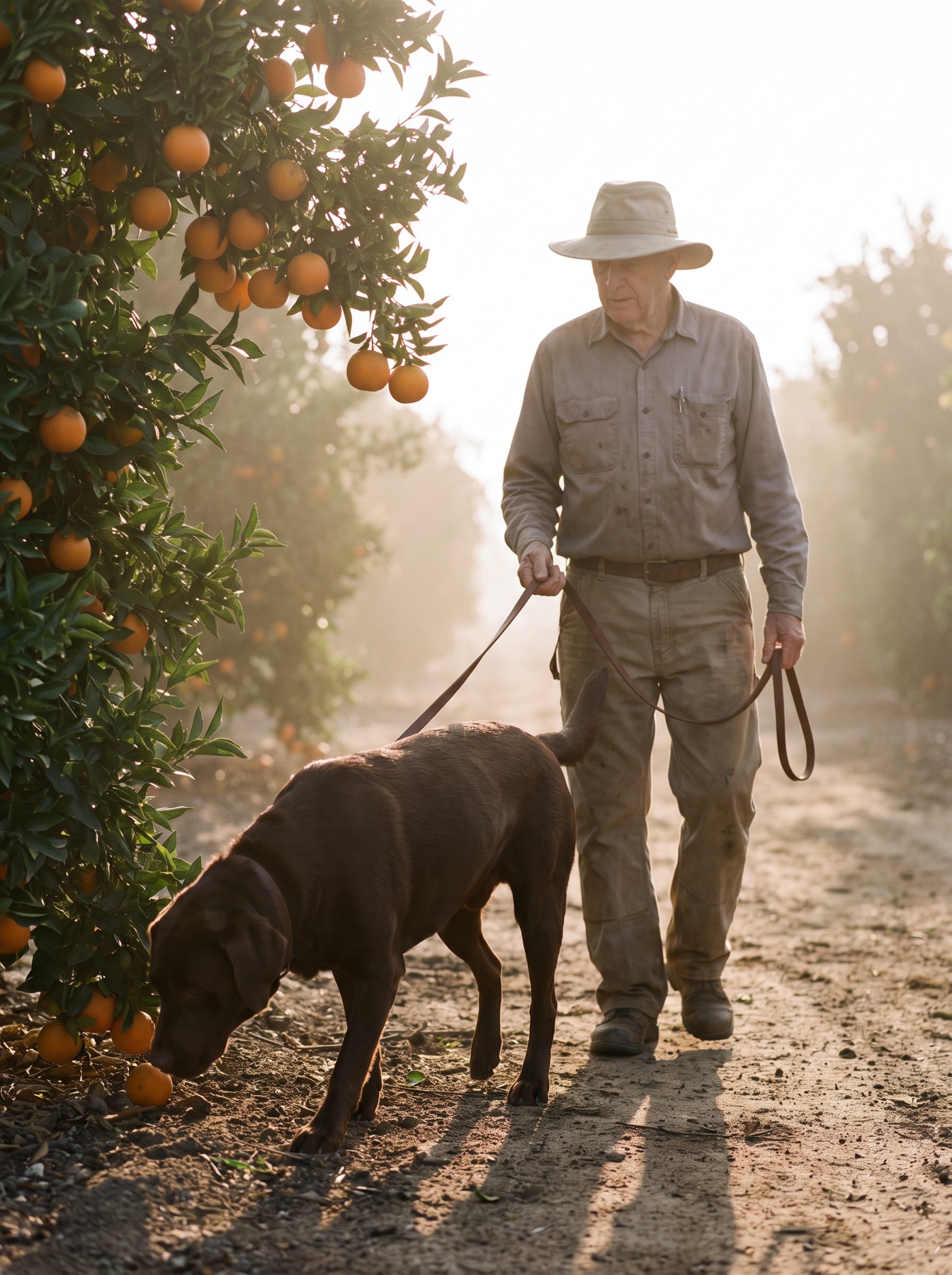
In a USDA-led study, ten dogs found citrus greening with 99% accuracy about two weeks after infection. Lab tests caught only 3% of infections at two months.
Gottwald et al., PNAS, 2020 ↗
Guam's cargo
Snake-detector dogs check outbound cargo for the brown tree snake, which has eliminated 10 of Guam's 13 native birds.
USDA Wildlife Services ↗
Boat ramps
Minnesota's conservation officers now work eight zebra mussel dogs, sniffing boats at lake accesses before they launch.
MPR News, 2026 ↗
Wild boar forests
After African swine fever reached Germany in 2020, Brandenburg trained 88 carcass-search dogs to find infected wild boar in forest and marsh.
Brandenburg state ministry, 2022 ↗
New World screwworm
USDA's National Detector Dog Training Center is preparing teams to detect screwworm infestations in animals at ports of entry.
USDA APHIS ↗
A handler and a chocolate Labrador work a row of orange trees, the dog's nose low to the ground
today and next
Today: trained dog teams through our K9 partners. Next: a neural readout designed to report many targets at once.
how we fit in

Built to drop into programs that already work.

See the technology
General Sense partners with established K9 providers, so a program keeps the dogs, handlers and routines it already runs. Today, adding a new target means retraining every dog, one odor at a time. Our neural readout is designed to let one dog report many targets in a single pass, with each search logged by time and place, so every walk through an orchard, port or watershed adds to its chemical record.
return on investment

Before It's Visible, It's Detectable

Read the case studies
Crop disease, contamination events, and invasive species emit chemical signatures weeks before they show up on any satellite image. In the USDA study's 10-year model of citrus greening, groves surveyed by dogs kept more than 92% of their trees healthy, while groves surveyed by eye kept none. Proactive management can prevent millions in losses.
Ripe oranges on a citrus tree with a faint data overlay
industry case
USDA study: Dogs detected citrus greening disease at 99% accuracy, as fast as 2 seconds per tree
earth-sensing infrastructure

The chemical layer of Earth observation.

Satellites record the planet's light, weather stations its physics, and eDNA and microphones its biology. The airborne chemistry that first signals a pest, a pathogen or a leak still has no network. A dog team is a mobile sensor that can be sent wherever a reading matters most, and over time those readings give models of the planet the chemistry they have been missing.
Detect
Find the first signs of a pest, pathogen or contamination while there is still time to act.
Verify
Confirm that an eradication or cleanup worked by checking that the target is really gone.
Baseline
Repeated searches build a chemical record of each farm, forest and port, so the next change stands out against it.

Bring us your hardest detection problem